By Florida Commercial Cleaning · Published · Updated
Why November is the most expensive month for your cleaning budget
November is when most Tampa Bay facility managers, property managers and operations leaders open their janitorial contract, glance at the monthly invoice and roll it into next year's budget unchanged. That is usually the most expensive decision of the year.
Across offices in Downtown Tampa and Westshore, medical suites in Brandon and Carrollwood, flex warehouses near Port Tampa Bay and multi-tenant buildings in St. Petersburg and Clearwater, the same pattern repeats: contracts written three or four years ago, before hybrid work, lease changes and new tenants, still dictate what gets cleaned, how often and at what price.
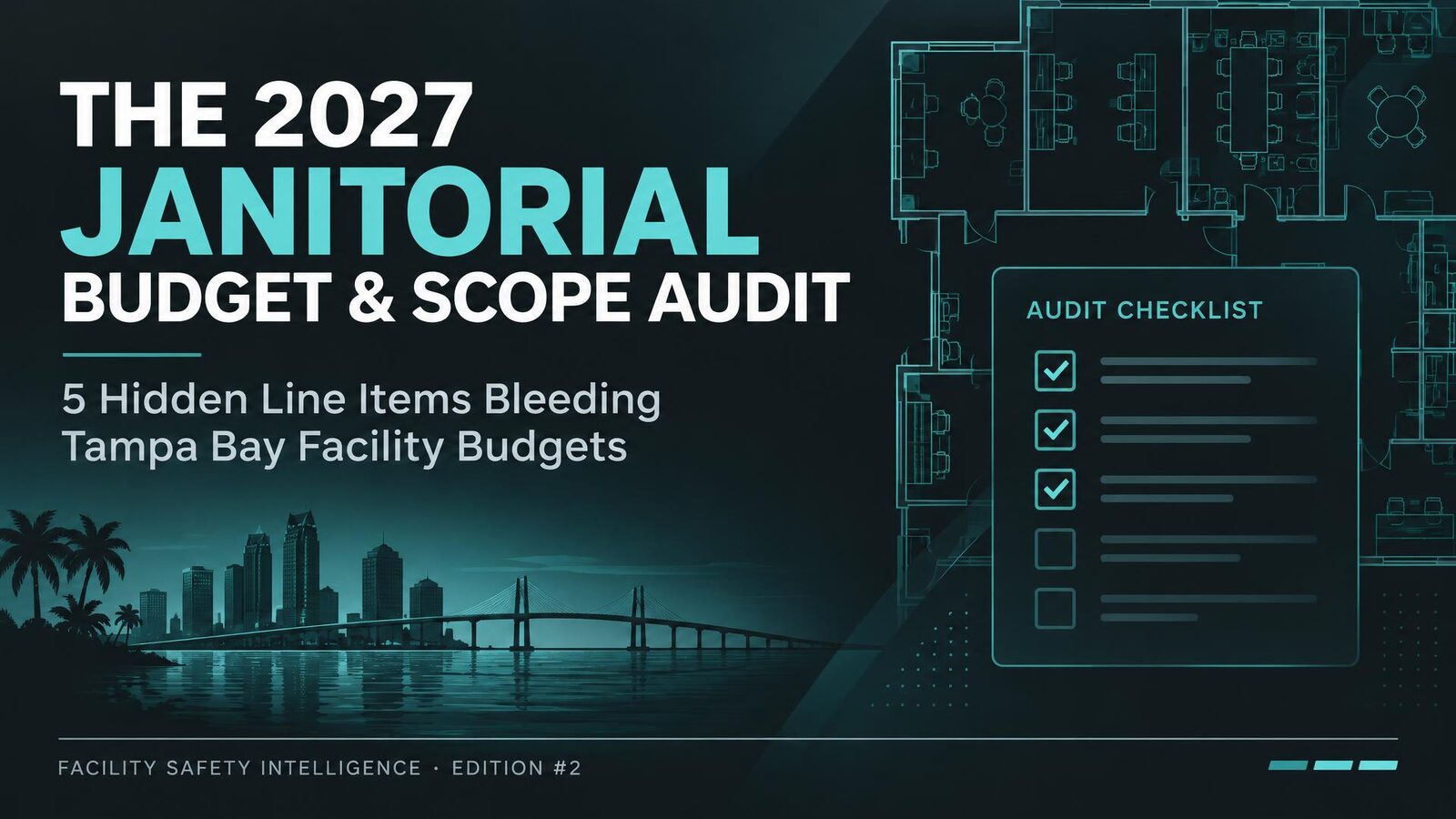
This audit walks through the five line items we see bleed budgets most often, what good looks like, and how to fix each one before your 2027 numbers are locked.

Hidden line item 1: square footage nobody re-measured
Janitorial pricing is usually built on cleanable square footage. When a tenant downsizes, a floor goes dark for hybrid work or a suite sits vacant, the contract often keeps billing for the original footprint.
Pull your current rent roll or space plan and compare it to the square footage on the cleaning agreement. Vacant suites can usually move to a light monthly check instead of nightly service, and mothballed floors can be dropped until they are re-leased.
- Compare billed square footage to occupied square footage, floor by floor.
- Move vacant or hybrid-dark areas to a reduced 'presentation' frequency.
- Re-measure after every tenant move-in, move-out or renovation.
Hidden line item 2: frequency that doesn't match traffic
Many contracts schedule the same tasks five nights a week everywhere: vacuum every office, dust every desk, empty every bin. Meanwhile the restrooms, breakrooms and lobby that take the heaviest traffic get the same single pass as an empty private office.
A traffic-based scope moves labor from low-use to high-use areas. Private offices may need vacuuming two or three times a week; restrooms in a busy call center may need a midday reset on top of nightly service.
- Restrooms (supplies, odor, floors)~45%
- Breakrooms and kitchens~25%
- Lobbies, entries and glass~15%
- Trash and recycling~10%
- Private offices and desks~5%
Illustrative distribution based on Florida Commercial Cleaning walkthroughs of Tampa Bay offices and multi-tenant buildings. Your building will vary. Bar lengths use a square-root scale.
Hidden line item 3: consumables buried in the monthly invoice
Paper towels, toilet tissue, can liners and hand soap are often bundled into a flat monthly fee or billed as 'supplies' without unit pricing. That makes it impossible to tell what you're paying per case, or whether dispensers are wasting product.
Ask for consumables to be itemized with unit prices and monthly usage. Switching to controlled-portion dispensers and higher-capacity rolls often reduces both cost and restroom out-of-stock complaints.
- Require itemized consumable billing with unit price and quantity.
- Compare the vendor's case prices to distributor pricing.
- Standardize dispensers so one product fits every restroom.
Hidden line item 4: the wrong staffing model for your building
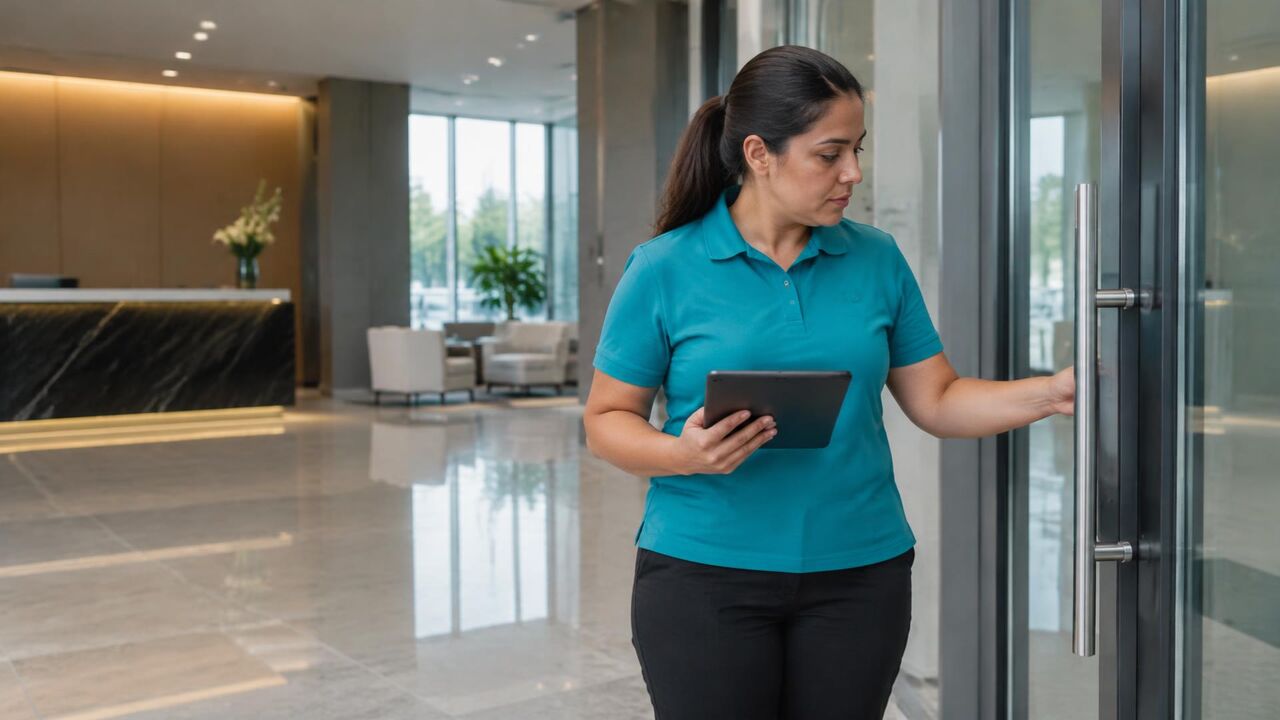
Night crews are efficient for deep work in empty buildings: floors, restrooms, trash and detailing. But many complaints happen during business hours, when nobody is on site to fix a spilled coffee, an empty soap dispenser or a lobby after a rainstorm.
For busy offices, medical buildings and multi-tenant properties, a day porter for a few peak hours can solve daytime issues while the night crew stays focused. For smaller sites, consolidating visits may cost less than daily service.
| Building profile | Common mismatch | Better fit |
|---|---|---|
| Class A office, 50k+ sq ft | Night-only crew, daytime complaints | Night crew + day porter |
| Medical / dental suite | Generic office scope | Nightly clinical-area disinfection |
| Small office under 5k sq ft | Five nights a week | Two to three visits a week |
| Flex warehouse | Office scope across whole footprint | Office/restroom nightly, warehouse weekly |
| Multi-tenant building | Uniform scope for every suite | Common areas daily, suites per lease |
Hidden line item 5: no proof the work was done
The most expensive cleaning contract is one you can't verify. If your vendor can't show inspection scores, issue logs, response times and who was on site, you're paying for an assumption.
Ask for scheduled quality inspections with written scores, a single point of contact, a documented process for correcting missed work, and clear service levels for urgent requests.
Tampa Bay janitorial cost benchmarks
Pricing depends on scope, frequency, building type and access. These ranges are general planning benchmarks for routine nightly janitorial service in the Tampa Bay area, not a quote. Use our cost calculator for an estimate based on your own building.
| Facility type | Typical monthly range per sq ft | Main price drivers |
|---|---|---|
| General office | $0.08 – $0.18 | Frequency, restroom count, occupancy |
| Medical / dental | $0.15 – $0.30 | Clinical disinfection, exam rooms |
| Multi-tenant common areas | $0.10 – $0.20 | Lobby traffic, elevators, glass |
| Flex / warehouse | $0.04 – $0.10 | Office share, floor type |
Your 5-step janitorial audit checklist
- Re-measure. Match billed square footage to what is actually occupied and used.
- Map traffic. Rank areas by use and set frequency by risk, not habit.
- Itemize supplies. Get unit pricing and usage for every consumable.
- Fit the staffing model. Decide whether a day porter, a night crew or both match your complaints.
- Demand proof. Require scored inspections, issue logs and response-time commitments.
Serving Tampa Bay and the surrounding cities
Florida Commercial Cleaning provides janitorial scope reviews, nightly cleaning, day porters and floor care across Tampa, Brandon, Riverview, Wesley Chapel, Lutz, Temple Terrace, Westchase, Plant City, St. Petersburg and Clearwater. Book a free walkthrough and we'll compare your current scope to what your building actually needs.
Frequently asked questions
- How often should I audit my janitorial contract?
- At least once a year, ideally before annual budgets are set in November or December, and after any tenant move, renovation or change in occupancy.
- How much does commercial cleaning cost per square foot in Tampa?
- Routine nightly office cleaning in Tampa Bay typically ranges from about $0.08 to $0.18 per square foot per month, with medical spaces higher. Scope, frequency and building type drive the final price.
- Should cleaning supplies be included in the contract?
- They can be, but ask for itemized unit pricing and monthly usage so you can see markups and waste.
- Do I need a day porter?
- If most complaints happen during business hours, such as restrooms running out of supplies or lobby messes, a day porter for peak hours is often more effective than adding night-crew time.
- What should a janitorial quality program include?
- Scheduled inspections with written scores, a single point of contact, a documented correction process and clear response times for urgent requests.
See the full plague disinfection and facility response guide, the biohazard response hub and our disinfection and outbreak response service.
Sources
Guidance on this page follows published public-health and regulatory sources. Verify current guidance before acting on anything time-sensitive.