By Florida Commercial Cleaning · Published · Updated
What Tampa Bay learned from Helene and Milton
In 2024, Hurricane Helene's storm surge flooded businesses along the coast from St. Pete Beach and Gulfport to Shore Acres and Davis Islands, and Hurricane Milton followed two weeks later with wind and inland flooding across Hillsborough, Pinellas and Sarasota counties.
The businesses that reopened fastest weren't the ones with the least damage. They were the ones who already knew who to call, what to throw out and what order to work in.
Your reopening order of operations
- Safety first. Don't enter with standing water near outlets. Have power checked by an electrician before turning it back on.
- Document everything. Photograph and video every room, waterline and damaged item before anything is removed.
- Remove water fast. Extract standing water and start drying within 24–48 hours to limit mold.
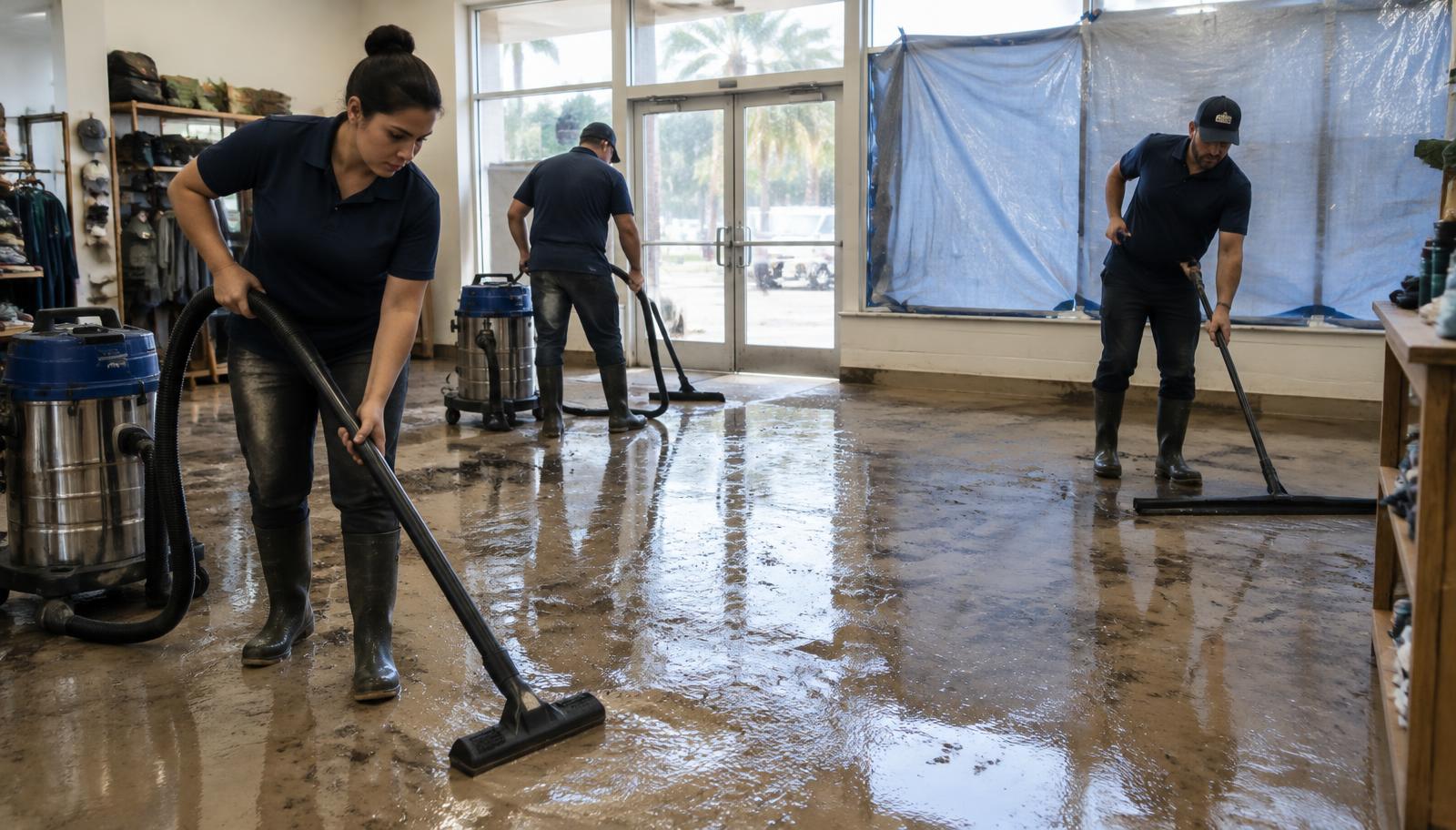
- Mud-out. Remove silt and debris from floors, walls and fixtures.
- Clean, then sanitize. Wash surfaces with detergent first, then apply an EPA-registered disinfectant or sanitizer per label contact time.
- Discard what can't be saved. Soaked drywall, insulation, carpet pad and ceiling tiles usually go. Any food that touched floodwater must be thrown out.
- Final reopening clean. Detail restrooms, kitchens, glass and floors so staff and customers walk into a clean space.
What stays and what goes
| Item | Usually | Why |
|---|---|---|
| Tile, sealed concrete, metal, glass | Clean and sanitize | Non-porous, cleans fully |
| Drywall below the waterline | Remove | Absorbs contaminated water |
| Carpet and pad soaked by floodwater | Remove | Can't be reliably sanitized |
| Ceiling tiles that got wet | Replace | Mold risk |
| Food, packaging and ice touched by floodwater | Discard | FDA and CDC food-safety guidance |
| Upholstered furniture | Case by case | Depends on water type and exposure |
Restaurants, medical offices and food businesses
Restaurants and food service in Tampa, Ybor City, St. Petersburg and Clearwater must follow Florida DBPR and FDA guidance after a flood: discard contaminated food, sanitize all food-contact surfaces with food-safe sanitizer, flush water lines and ice machines, and confirm safe water before reopening.
Medical and dental offices should treat floodwater as contaminated, follow CDC environmental infection control guidance, and re-verify sterilization areas before seeing patients.
Get on our storm response list before the next one
Florida Commercial Cleaning provides storm cleanup, sanitizing and reopening cleans for businesses across Tampa, Brandon, Riverview, Apollo Beach, Ruskin, St. Petersburg, Clearwater, Sarasota and Lakeland. Contract clients get priority scheduling after a storm. Call (813) 738-4220 or request a walkthrough to set up a plan now.
Frequently asked questions
- How soon should cleanup start after a flood?
- Within 24–48 hours. Mold can begin growing on wet materials in that window, so water removal and drying are the first priority once the building is safe.
- Is floodwater dangerous?
- Yes. Floodwater can carry sewage, chemicals and bacteria. Wear gloves and boots, and treat anything it touched as contaminated until cleaned and sanitized.
- Do you handle mold remediation?
- We handle cleaning, sanitizing and prevention. Mold covering large areas or inside walls should go to a licensed Florida mold remediator; we coordinate and do the final clean.
- Can a restaurant reopen right after the power comes back?
- Only after discarding unsafe food, sanitizing food-contact surfaces, confirming safe water, and meeting Florida DBPR requirements.
See the full plague disinfection and facility response guide, the biohazard response hub and our disinfection and outbreak response service.
Sources
Guidance on this page follows published public-health and regulatory sources. Verify current guidance before acting on anything time-sensitive.