Recurring prevention · Listeria prevention
Recurring Listeria Drain Prevention for Florida Food Plants
Listeria grows in cold, wet drains, even at refrigerator temperatures. A scheduled scrub and biofilm treatment every one to two weeks stops it from building a home there, so your environmental swabs stay negative instead of turning into a hold, a 483 or a recall.
Why drains keep testing positive
Listeria monocytogenes survives refrigeration and attaches to rough surfaces in drain bodies, baskets and trench walls. Once it is inside a biofilm, routine floor sanitizer runs over the top of it. Every time someone sprays a hose into that drain, aerosol can carry it back onto floors, carts and footwear.
Most plants clean drains reactively, after a positive. By then the biofilm is mature and the fix is a costly emergency. A recurring program keeps the film young and thin, which is when chemistry and brushes actually work.
What a prevention visit looks like
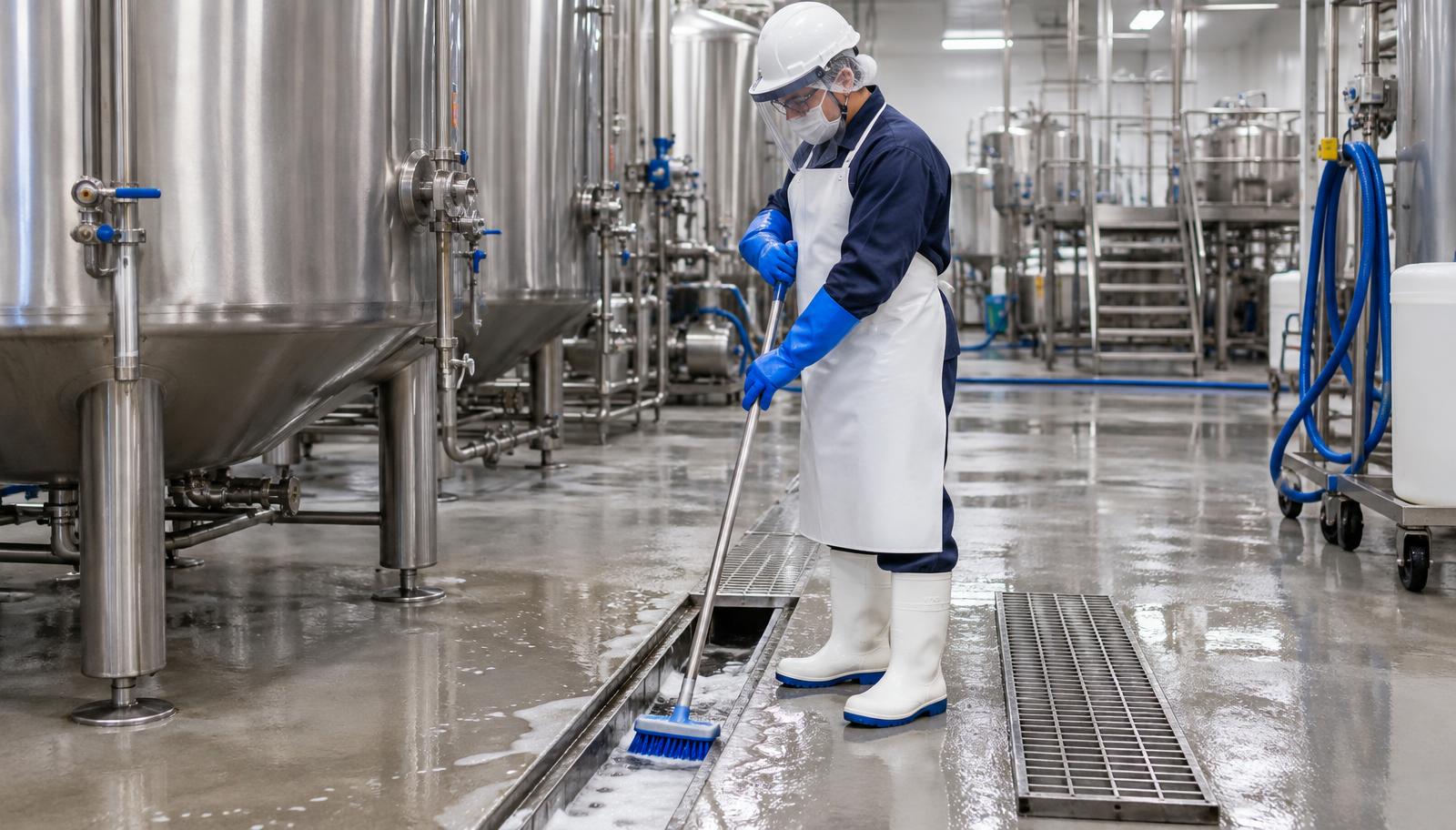
We pull every grate, basket and cover on your drain map, apply an enzymatic or alkaline foam that breaks down biofilm, scrub with dedicated color-coded drain brushes that never touch anything else, rinse at low pressure to limit aerosol, and finish with a sanitizer rotation at label strength and contact time.
You get a dated log of each drain, chemistry, concentration and dwell time. Many plants rotate chemistries quarterly so a resistant population never settles in.
Every visit includes
- Drain map review with your QA lead
- Grates, baskets and covers removed and cleaned separately
- Biofilm foam, mechanical scrub, low-pressure rinse
- Sanitizer at label concentration with verified dwell
- Written log for your environmental monitoring file
Questions
Listeria prevention program FAQ
- How often should Listeria drains be cleaned?
- Most cold, wet production rooms do well every one to two weeks. Drains with a history of positives may need weekly service for the first 90 days.
- Is there a long contract?
- No. Programs are month to month after the first 90 days, which is how long it takes to see the swab and pest trend change. You can change frequency any time.
- Do you work around production?
- Yes. Visits happen during your sanitation shift, after close, or on a dark day. We never introduce water into dry rooms.
- Do you serve outside Tampa?
- Yes. Tampa Bay is home base. Recurring food facility programs are available statewide, from Tallahassee and Jacksonville to Orlando, the Space Coast, Naples, West Palm Beach and Miami.
Related programs
Other prevention programs
Request emergency mobilization
One-time food and hygiene emergencies across Florida. $500 deposit toward your project. Same-day requests only in verified Hillsborough County; allow at least 24 hours elsewhere. Written dispatch confirmation required.