Food safety response
Food Recall & Regulatory Shutdown: Getting Your Plant Back Online
A recall or regulatory hold stops revenue, ties up product and puts customer contracts at risk. Restart depends on proving that the root cause was found and the facility was effectively cleaned. We bring trained crews to strip, clean, sanitize and disinfect affected areas, verify with ATP testing, and hand you a complete written record to support your corrective-action plan with FDA, USDA FSIS, FDACS or your auditor.
48M
Americans get sick from foodborne illness each year (CDC)
128,000
Hospitalized annually (CDC)
3,000
Deaths annually (CDC)
6 steps
Our documented isolate-to-handback restart protocol
Speed matters — but the paperwork matters more
Regulators and auditors don't accept "we cleaned it." They want to know what was cleaned, with what, at what concentration, for how long, by whom, and how it was verified. Our crew leads log every area, chemistry, dilution, dwell time and ATP result as they go, so your corrective-action report is ready when the work is.
Clear boundaries
We don't run your root-cause investigation, lab testing or communications with regulators — those stay with your food safety team and advisors. We give you the trained hands, equipment and documentation to execute the cleanup quickly and correctly.
Return to operation
Our Recall restart response & restart plan
1. Isolate & hold
Affected lines, rooms and product are tagged out. We map zones 1–4 with your QA lead so nothing is cleaned in the wrong order.
2. Dry pick-up & gross removal
Product, debris and soil removed. Dry facilities stay dry — HEPA vacuums and brushes, no water introduced where Salmonella risk is high.
3. Strip-down & foam wash
Guards, belts, scrapers and removable parts pulled. Alkaline or enzymatic foam breaks biofilm; top-down, back-to-front rinse.
4. Sanitize & disinfect
EPA-registered disinfectants on environmental surfaces and food-contact sanitizers at label concentration and full contact time, verified with test strips.
5. Verify
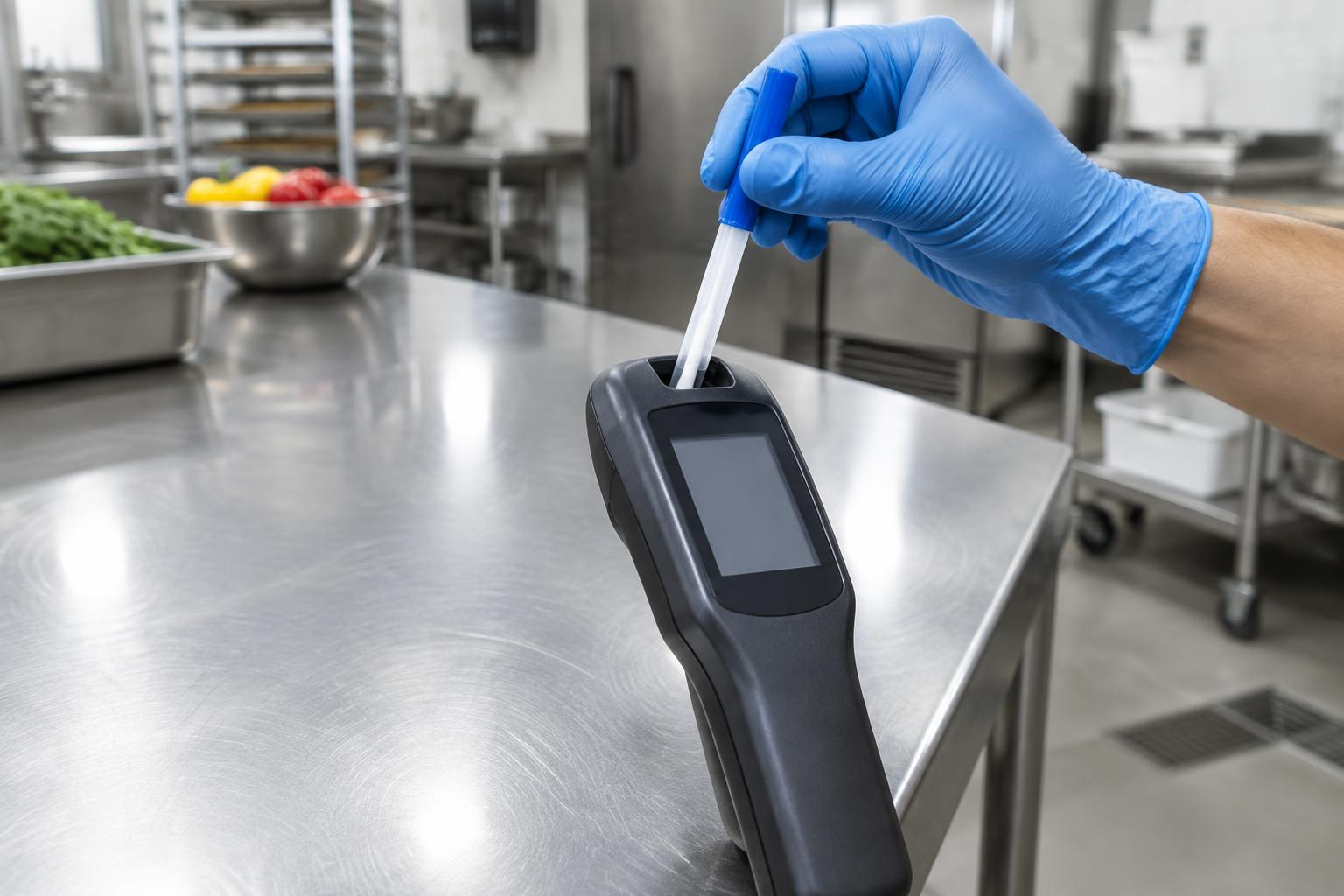
ATP swabs on every food-contact surface, with re-clean on any fail. Your lab or third party runs pathogen swabs; we re-treat positives.
6. Document & hand back
A written record of areas, chemistries, concentrations, dwell times, ATP readings and crew — the file your auditor, FDA, USDA FSIS or FDACS inspector asks for.
Source: CDC estimates of domestically acquired foodborne illness per year (Scallan et al., 2011).
Industries we serve
- Food & beverage manufacturers
- Co-packers
- Cold storage & distribution
- Seafood & meat processors
- Produce packers
- Commissaries & ghost kitchens
Areas we dispatch to
- Tampa, FL
- Plant City, FL
- Brandon, FL
- Lakeland, FL
- St. Petersburg, FL
- Clearwater, FL
- Riverview, FL
- Wesley Chapel, FL
- Bradenton, FL
- Ocala, FL
- Jacksonville, FL
- Miami, FL
- Statewide Florida & nationwide by arrangement
Questions
Recall restart response FAQ
- How quickly can you mobilise?
- Food plant emergencies are prioritised. Priority Response Retainer clients are dispatched first. Call or text (813) 738-4220.
- Do you work statewide?
- Yes — Tampa Bay, Central Florida, Orlando, Jacksonville, South Florida and the Panhandle, and nationwide by arrangement.
- Are your chemicals food-safe?
- Food-contact surfaces are treated with food-contact sanitizers at label concentration (no-rinse where labelled). EPA-registered disinfectants are used on environmental surfaces, and food-contact surfaces are rinsed and re-sanitized after disinfection as the label requires.
- Can you put us on a retainer before something happens?
- Yes. A retainer gets you a pre-walked facility, a written response plan and priority dispatch.
Sources
Guidance on this page follows published public-health and regulatory sources. Verify current guidance before acting on anything time-sensitive.
More food safety response
Other pathogens & recall scenarios
Recall restart problem right now?
Call or text (813) 738-4220 — tell us the facility, the findings and the affected areas, and we'll scope and dispatch.